Buying a Food Truck in the Bay Area: Everything You Need to Know
The Basics of the Mobile Food Business
After 15 years of being around the mobile food business, we’ve seen a thing or two about the right and wrong way to jump into the business. While it might seem self-evident that food trucks are different from restaurants, a lot of entrepreneurs don’t understand that the difference starts from the very first decision of a mobile food business: buying your truck. Food trucks are flexible in where they go (than restaurants) but less flexible in the equipment and space size. Keep in mind: Once you’ve made the truck investment you can’t easily change the equipment (like in a restaurant) as its built into the vehicle, and you can’t add space to the truck. The way to avoid making a costly mistake is being clear about your concept, daily operations, menu capabilities, and goals for potential revenue and staffing in advance of your truck purchase. Truck options present advantages and challenges that must be carefully weighed against your business goals, budget, and operational plan for where you plan to serve. The guide below is for people thinking about food trucks as a business. Maybe you're thinking about buying. Maybe you're thinking about renting. We hope this helps you understand the business landscape to make the best decision possible. We look forward to welcoming you to the mobile food community!
Choosing a Mobile Asset Type
Food Carts: While limited in capacity, they excel in urban environments where space is premium. Their lower initial investment (typically $15,000-30,000) makes them an attractive entry point into mobile food service. Key considerations:
- Sidewalk-friendly footprint
- Lower startup costs and maintenance
- Limited storage and cooking capabilities
- Weather exposure challenges
- Best suited for simple menu concepts (e.g., hot dogs, coffee)
SF Public Works Mobile Food Facility Requirements Food Trailers: A cost-effective alternative to full trucks, offering similar kitchen capabilities without engine maintenance concerns. Initial investment ranges from $40,000-80,000, roughly 30-50% less than comparable trucks. Benefits and considerations:
- Full kitchen capabilities
- Lower initial investment and maintenance costs
- Requires tow vehicle
- Challenging urban mobility
- Ideal for semi-permanent locations
Route Truck (14-18 ft) These smaller vehicles offer excellent maneuverability for urban environments while maintaining essential kitchen capabilities. Perfect for specialized concepts, especially those not requiring open flame cooking. Features:
- Enhanced maneuverability
- Compact kitchen layout
- Limited storage
- Ideal for specialized menus
- Easier parking in urban areas
Commissary / Full Service Truck (18+ ft)****: Larger trucks provide maximum versatility and capacity but come with additional operational challenges. Initial investment typically ranges from $80,000-150,000. Advantages:
- Extensive kitchen capabilities
- Superior storage capacity
- Better staff working conditions
- Higher daily service capacity
- Enhanced menu flexibility
General Vehicle Construction Requirements for Bay Area California HCD Compliance: The Housing and Community Development (HCD) insignia is mandatory for mobile food facilities in California. The insignia confirms compliance with state safety standards and construction requirements. Any vehicle you stand inside needs one. Key requirements:
- Certified plans and inspections
- Safety compliance verification
- Annual renewal requirements
- CA HCD Mobile Food Facility Guidelines
Health Department Equipment and Infrastructure Needs: Plan Check Requirements:
- Detailed kitchen layout
- Equipment specifications
- Utility systems diagrams
- Ventilation plans
- Health department approval
- Sample Menu with Food Handling Plan
Essential Systems:
- Minimum 30-gallon fresh water tank
- 1.5x wastewater capacity (45-gallon minimum)
- Hot water (120°F minimum)
- NSF-certified equipment
- Type I hood system with fire suppression
- Class K fire extinguisher for cooking oils
- Class ABC fire extinguisher for general safety
Power Systems: Generator Requirements Reliable power supply represents a critical operational requirement for mobile food service. Understanding your power needs and options ensures consistent service and compliance with health department requirements while optimizing operational efficiency. The power keeps the refrigeration going and its now required to have active refrigeration for your vehicle.
- We Recommend a Minimum 7000W capacity
- Fuel type considerations
- Diesel: More efficient, longer runtime
- Gas: Easier maintenance
- Propane: Cleaner burning, shared fuel source
Health Permitting
General Certification Requirements
- ServSafe Food Manager Certification
- Food Handler Cards for all staff
- County-specific health permits
- Annual inspections and renewals
Jurisdictional Considerations Each county maintains distinct requirements:
- San Francisco County: SF Health Permit Requirements
- Alameda County: ACPHD Mobile Food Requirements
- San Mateo County: Environmental Health Services
- Santa Clara County: DEH Mobile Food Requirements
- Contra Costa County: Environmental Health Division
Building Your Brand Identity
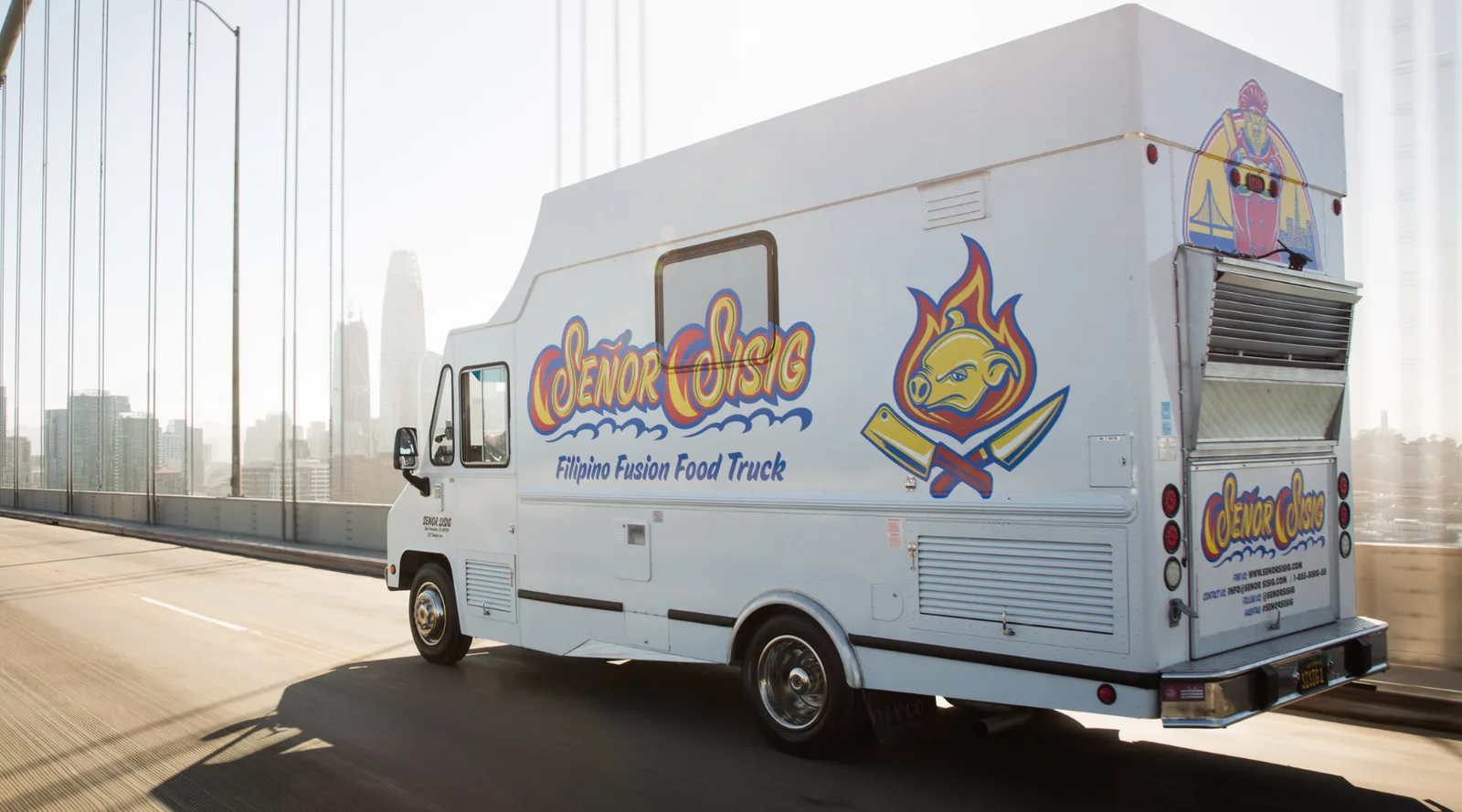
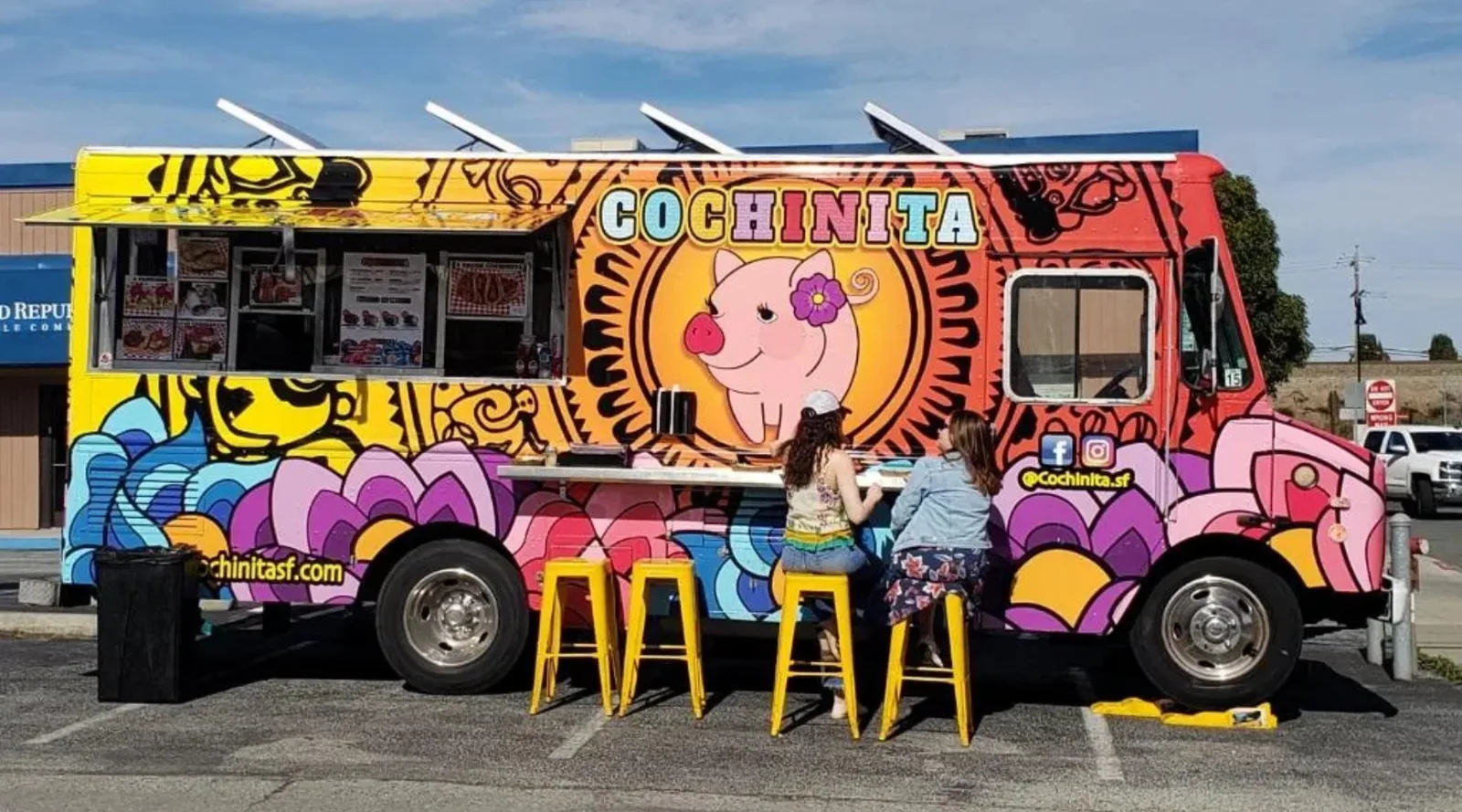
Your food truck's visual presentation serves as a moving billboard, making your truck branding a crucial marketing investment. Effective design combines visual appeal with practical considerations about visibility and information communication. A well-executed wrap can significantly impact customer attraction and brand recognition.
Wrap Design Considerations
Professional wrap design typically requires:
- 20-40 hours design time (2000-4000$)
- High-resolution artwork
- Brand story integration
- Template matching for the vehicle
- Wrap $6000-$15,000 (Depending on vehicle size and material type)
Successful wrap examples emphasize:
- Clear brand visibility
- Menu readability & location
- Social media integration
- Cultural /brand story
- Memorable visual impact
Commissary Operations
California Health Code requires all mobile food facilities to operate from an approved commissary. Commissaries form the backbone of food truck operations, providing essential services and meeting regulatory requirements. These facilities serve as your business's home base, offering infrastructure that enables safe and efficient food preparation and vehicle maintenance. These facilities provide:
- Potable water supply
- Wastewater disposal
- Approved food storage
- Vehicle cleaning area
- Food preparation space
- Dry storage
- Refrigeration
- Vehicle Storage
Insurance Coverage
Required Policies:
- General Liability ($1M minimum)
- Commercial Auto ($1M minimum)
- Workers' Compensation (if employees)
- Additional Insured Certificates
Location Considerations: Success in the food truck business heavily depends on securing profitable locations while navigating complex permitting requirements. Understanding the interplay between health permits, site permits, and property rights helps optimize your operational strategy. Permit Requirements:
- Health Department approval
- Site-specific permits
- Property owner permission
- Special event permits
- Park permits (jurisdiction specific)
Menu Planning:
Your menu concept must align with your kitchen capabilities and operational efficiency goals. Understanding the relationship between equipment, storage, preparation space, and service speed helps optimize both customer satisfaction and profitability. Your largest truck utensil cannot exceed the size of your sink. An initial menu proposal will need to be included in your Health Department applications. Operational Considerations:
- Equipment limitations
- Storage capacity
- Preparation space & Food Handling Plan (From Commissary to Truck)
- Service speed
- Staff requirements
Financial Overview:
Understanding the financial landscape of food truck operations helps set realistic expectations and supports effective business planning. Initial investment, operating costs, revenue potential, and profitability metrics vary significantly based on multiple factors including location, concept, and operational efficiency. Initial Investment Ranges New Custom Truck:
- Range: $120,000-180,000
- Includes full kitchen buildout and initial equipment
- Health department compliance features
- Generator and utility systems
Used Truck:
- Range: $40,000-120,000
- May require additional upgrades
- Important to verify HCD compliance
- Consider renovation costs
- Higher ongoing maintenance costs
Revenue Metrics
In food trucks, more revenue doesn’t necessarily translate to more profit. The length of the shift and the amount of staff can eat away at the profit margin. Conversely, choosing the wrong size vehicle at the outset may limit your ability to serve larger volumes once established by not being able to accommodate the refrigeration, storage and staff space necessary to execute. Daily Revenue Targets:
- Standard shift minimum: $1,000
- Target average: $1,500
- Top performers: $2,000-3,000
Annual Revenue Benchmarks:
- Top 10%: $600,000-700,000
- Median: $350,000-400,000
- Bottom 25%: $250,000
Seasonal Variations:
- Peak season (April-November): +30% revenue
- Low season (November-March): Base revenue
Staffing Guidelines: Efficient staffing represents a critical balance between service quality and operational costs. Understanding how to scale your team with revenue while maintaining profitability requires careful planning and monitoring of key performance indicators. General Revenue-based staffing:
- $500-1,500: 1-2 staff
- $1,000-2,500: 2-3 staff
- $2,000-4,000: 3-4 staff
Adjust staffing seasonally accounting for 30% revenue fluctuation during low season.